
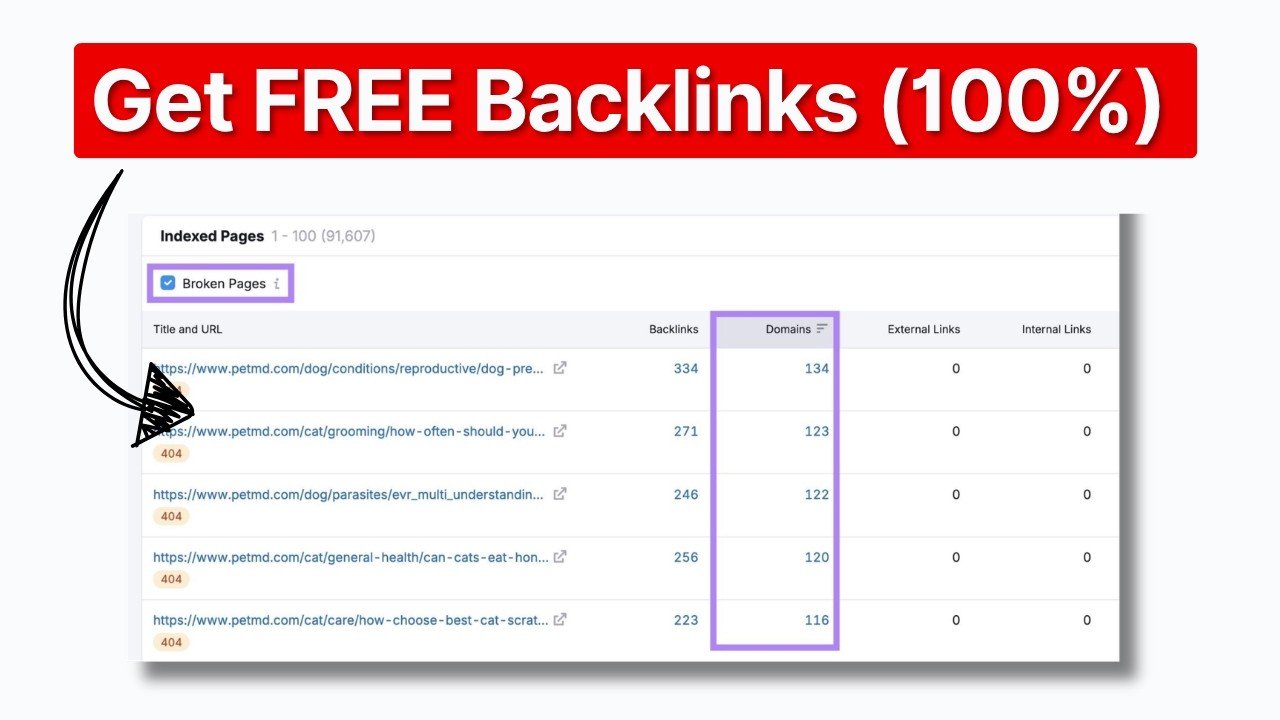
For tool and SaaS-style sites, Raj focuses on brand monitoring in Semrush: find pages that mention you (excluding your own domain) but do not actually link. Those are often the most natural outreach targets, because the mention already exists.
That is a legitimate, old SEO tactic. It works only when the mention is real and the email is honest. It is not a substitute for a product people want to cite.
Steps from the video
- Set up brand monitoring for your exact name and obvious misspellings, excluding your own domain.
- Open mention reports and filter for pages that have no link back to you.
- Check the page: is it a genuine mention, a good neighbourhood, and worth a request?
- Write a short note that points to the mention and asks whether a link would help their readers. Do not disguise a paid placement as a favour.
Do not scale this into mass spam. A few accurate requests beat a hundred generic ones. If you sell a tool, also make sure there is a clear page worth linking to.
This video is affiliated with Semrush. The click change Raj mentions (on the order of a jump from about 15 to 21 clicks in a day, described as maybe 24 to 48 hours) is a small, short-term observation on his own property — not a typical result and not a promise.
Need help with a backlink and content plan?
Our SEO work includes content and earned links, not purchased “packages” of random domains. See SEO or contact us.
FAQ
What kind of backlink is he hunting?
Pages that already mention the brand or tool but have not added a link — unlinked mentions — rather than buying random links.
Is there a magic outreach prompt?
He says he will give a prompt to send to prospects. A template can start an email. A relevant page and a polite, accurate request matter more than the wording of any one prompt.
How this fits with QueryLookup
If you want help applying this on a business site, see the related service page, browse more videos, or contact QueryLookup. QueryLookup (Querylookup Research) is a Bengaluru studio working on Google SEO, websites, AI automations, WhatsApp workflows, Facebook ads, and AI social videos. This write-up is an edited companion to the YouTube video, not a caption dump, and it does not replace watching the walkthrough when you need the exact clicks.
The source video runs 5:57 and was published on 2026-10-14. It is one of the recent long-form uploads from the Querylookup Research channel, not a YouTube Short. Use the article to decide whether the method is relevant to your site, then watch the segment you need. None of these posts promise rankings, traffic, or income. Tool names, prices, model availability, and promotional offers change. When a video is sponsored or uses an affiliate link, that is stated in the article. For how we handle claims and recommendations on this site, read the editorial policy and disclaimer.
Before you copy the workflow
Check that the product screens in the video still exist. AI tools, SEO platforms, and domain registrars redesign their dashboards often, and a beta feature can disappear. Prefer official documentation and your own billing or admin screens over any single screenshot. If the video involves connecting WordPress, an API key, or a business profile, use a revocable credential and keep client data out of third-party tools you have not vetted. If you are a local business, pair any AI or content experiment with the basics that still move the needle: a complete Google Business Profile, accurate contact details, and service pages that say who you help.
If you decide the idea is worth trying on a company site, start with one page or one workflow, measure it, and keep a human editor in the loop. That is the same standard we use when we take on SEO or automation work. Questions about a project can go to info@querylookup.com.